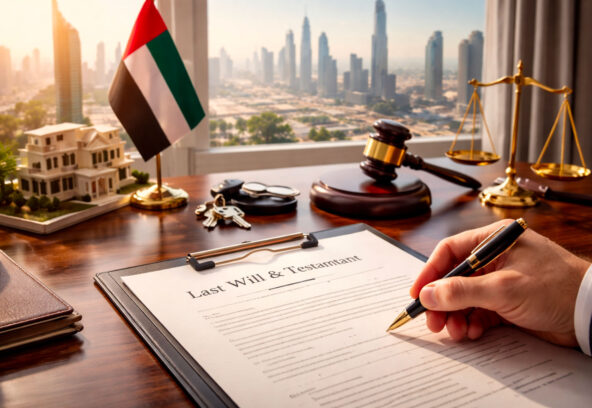

Who can legally and rightfully inherit an estate in the UAE?
Inheritance in the UAE is governed by specific rules that vary depending on the deceased’s religion, whether a will exists, and the jurisdiction where it is registered.
If you’re an expatriate with assets in the UAE, it’s vital to understand who can inherit your estate and how to ensure your assets go to the right people.
Inheritance Without a Will: Who Is Entitled?
If someone dies without a registered will, their estate is distributed according to Sharia—unless the family formally requests application of the law of the deceased’s home country. This process is not automatic and can involve delays and bureaucracy.
Practical Example
Suppose an expatriate owns a flat in Dubai and bank accounts in the UAE. Upon their death:
- If the family doesn’t promptly request their home law, assets will be distributed under Sharia
- The wife might receive only ⅛, while the rest goes to children or, in their absence, other relatives
- If no direct heirs exist, the estate may go to the state
This situation is particularly problematic for non-Muslim expats, as Sharia assigns fixed shares that may not reflect personal wishes.
Who Are the Legal Heirs With a Registered Will?
When a registered will is in place, the estate is distributed entirely according to the testator’s wishes, regardless of Sharia.
Examples of heirs you can name in your will:
- The spouse can inherit 100%
- Children can inherit equally, regardless of gender
- Non-relatives, charities, or companies can be beneficiaries
- Guardians can be appointed to manage minors’ inheritance
Real case: A French investor in Dubai registered a will leaving his entire estate to his wife and specifying that the children would inherit only at age 25. The will ensured his wishes were respected and prevented the wife from receiving only a limited share under Sharia.
Who Is Excluded From Inheritance Under Sharia?
Without a registered will, some loved ones may receive nothing—even if they played an important role in the deceased’s life.
- Adopted children – Not automatic heirs under Sharia
- Non-Muslim spouses – May be excluded if the deceased was Muslim
- Unmarried partners – Have no inheritance rights without a registered will
Solution: Registering a will is the only way to ensure your estate goes to those you choose, free from Sharia constraints.
What Happens if Someone Dies Without Heirs or a Will?
If no will or heirs exist, the estate is distributed under Sharia to the nearest relatives. If no relatives are found, the estate may be transferred to the State and handled under UAE law. This underscores the importance of registering a will to avoid uncertainty and ensure your estate goes where you want.
Succession for Expats: Common Mistakes to Avoid
Many foreigners assume their estate will follow their home country’s laws. In the UAE, this is not the case without a registered will.
Mistake #1: Believing a will drafted abroad is sufficient → Without UAE registration, foreign wills may not be recognised.
Mistake #2: Failing to appoint an executor → Without one, heirs face a longer bureaucratic process.
Mistake #3: Not updating the will after property purchases → Unlisted assets may be distributed under Sharia. A comprehensive will avoids this and automatically includes all current assets.
How to Protect Your Assets in the UAE
Registering a will with a local court is the safest and fastest way to ensure your estate is inherited according to your wishes.
EasyWill offers a digital platform that simplifies will registration, helping you:
- Freely name your heirs
- Avoid legal complications and hidden costs
- Protect your estate from automatic Sharia application
Want to protect your family and assets? Contact us today to register your will securely and with full legal compliance.